Featured
Data Insight
Jan. 9, 2026
Data Insight
Dec. 23, 2025
Data Insight
Mar. 12, 2025
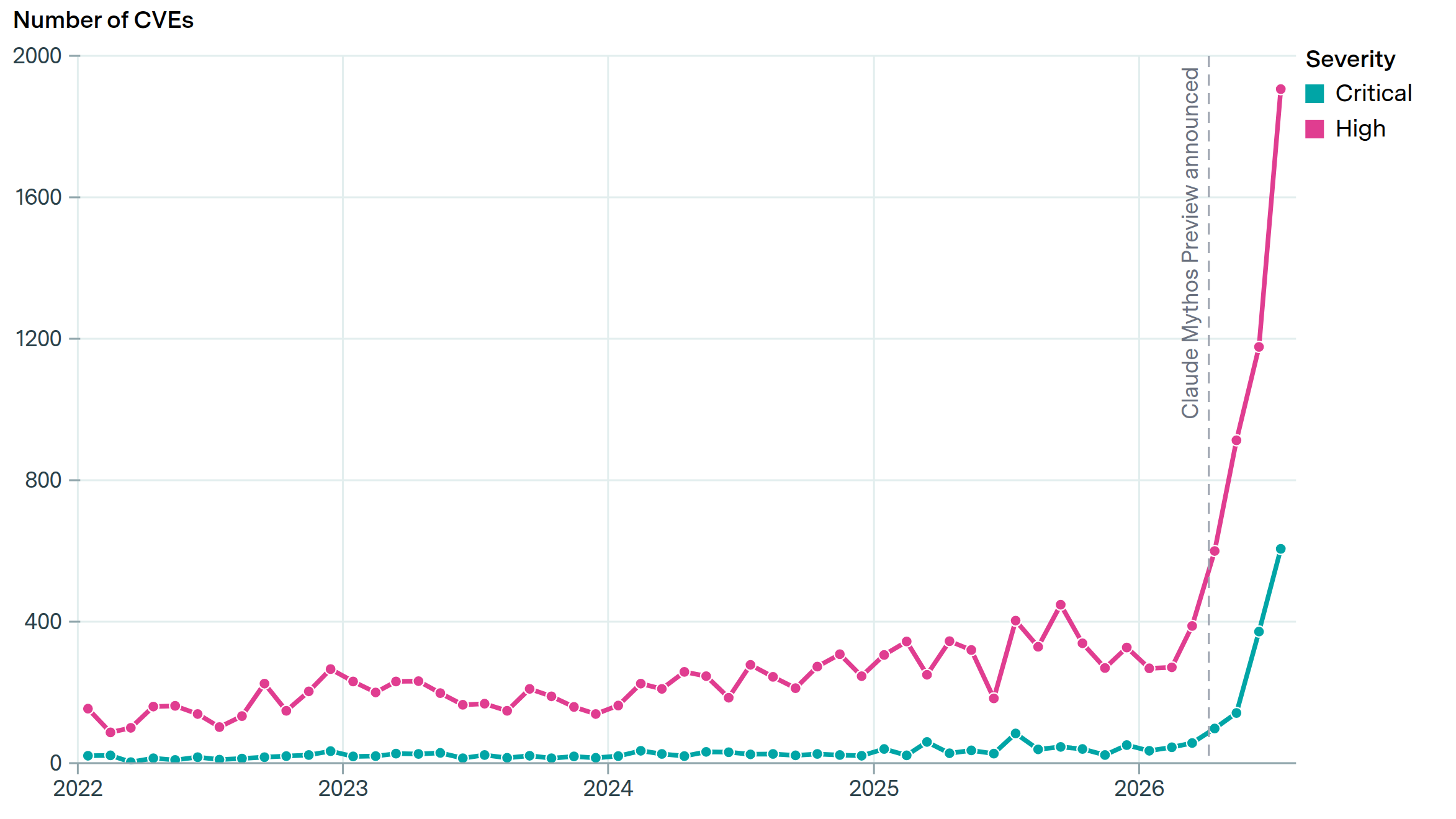
Notable organizations disclosed ~2,500 high- and critical-severity CVEs in July 2026, about 5× the pre-Mythos monthly record. Epoch AI's updated breakdown of vulnerability disclosures following Anthropic's Project Glasswing.
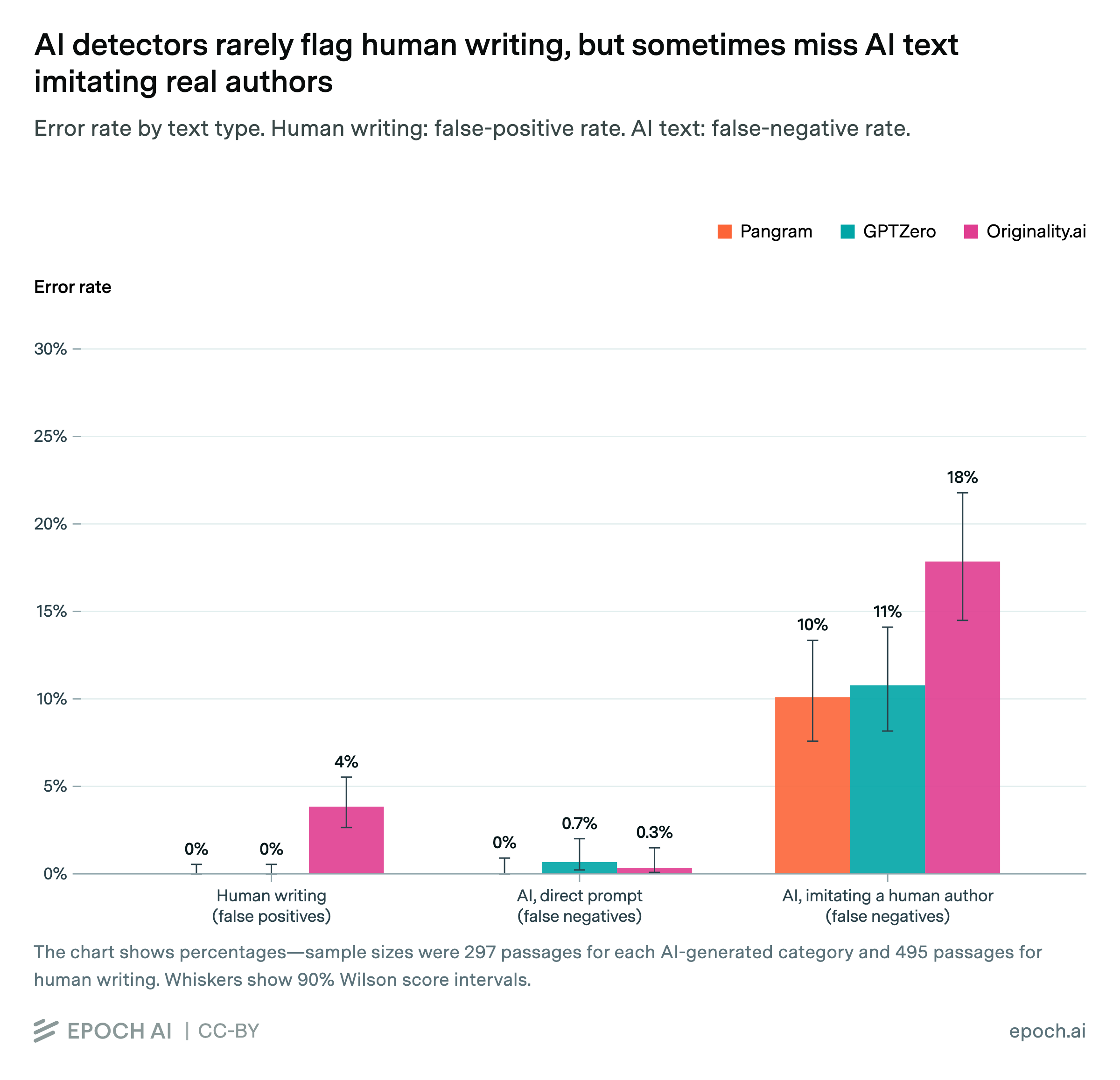
We tested Pangram, GPTZero, and Originality.ai on human and AI text. All three caught nearly every passage written from a simple prompt, but missed roughly one in five passages imitating a specific author's style.
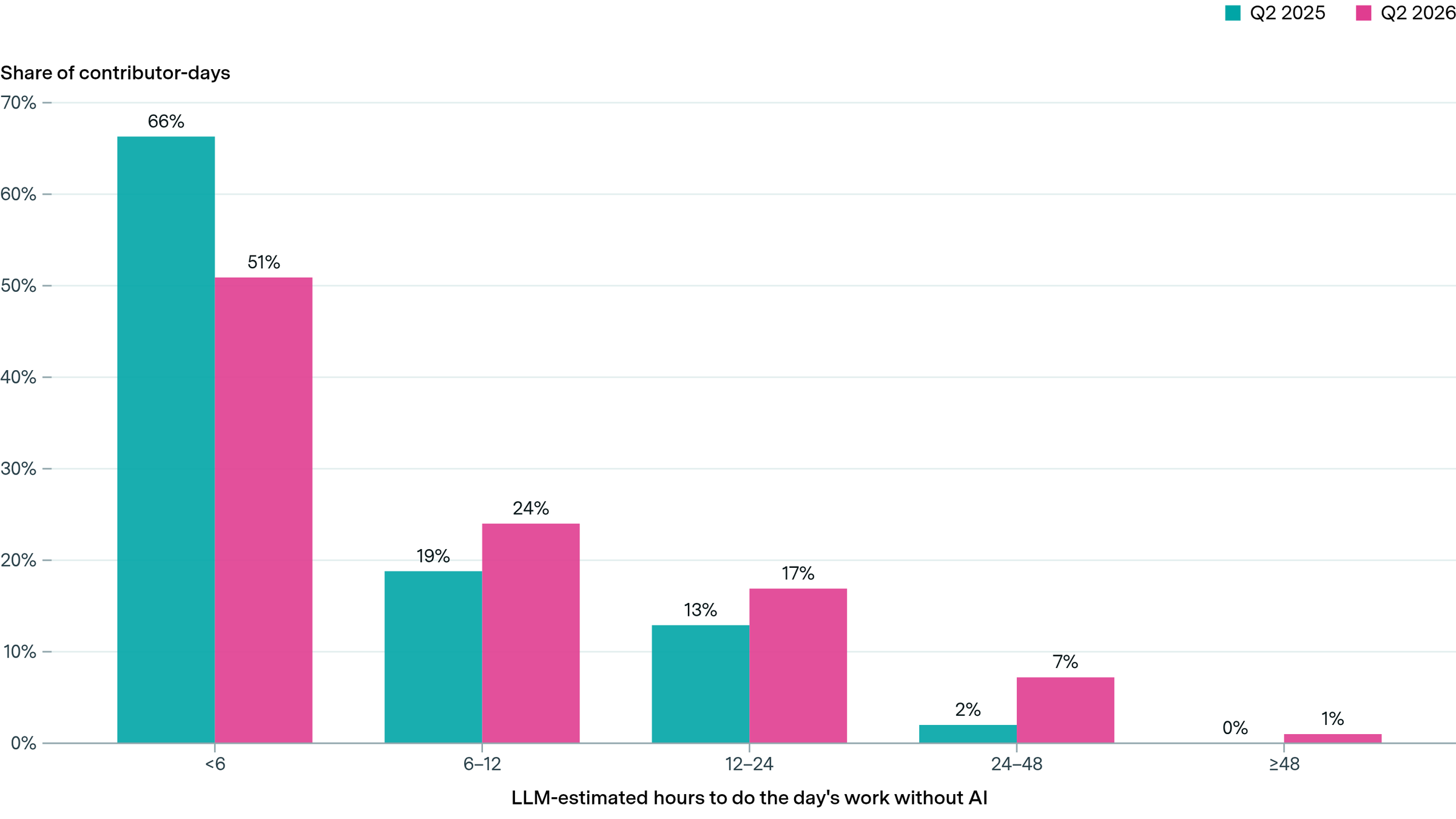
The share of working days on which OpenAI's Codex collaborators merged very-high-effort code rose from about 2% in Q2 2025 to about 8% in Q2 2026.
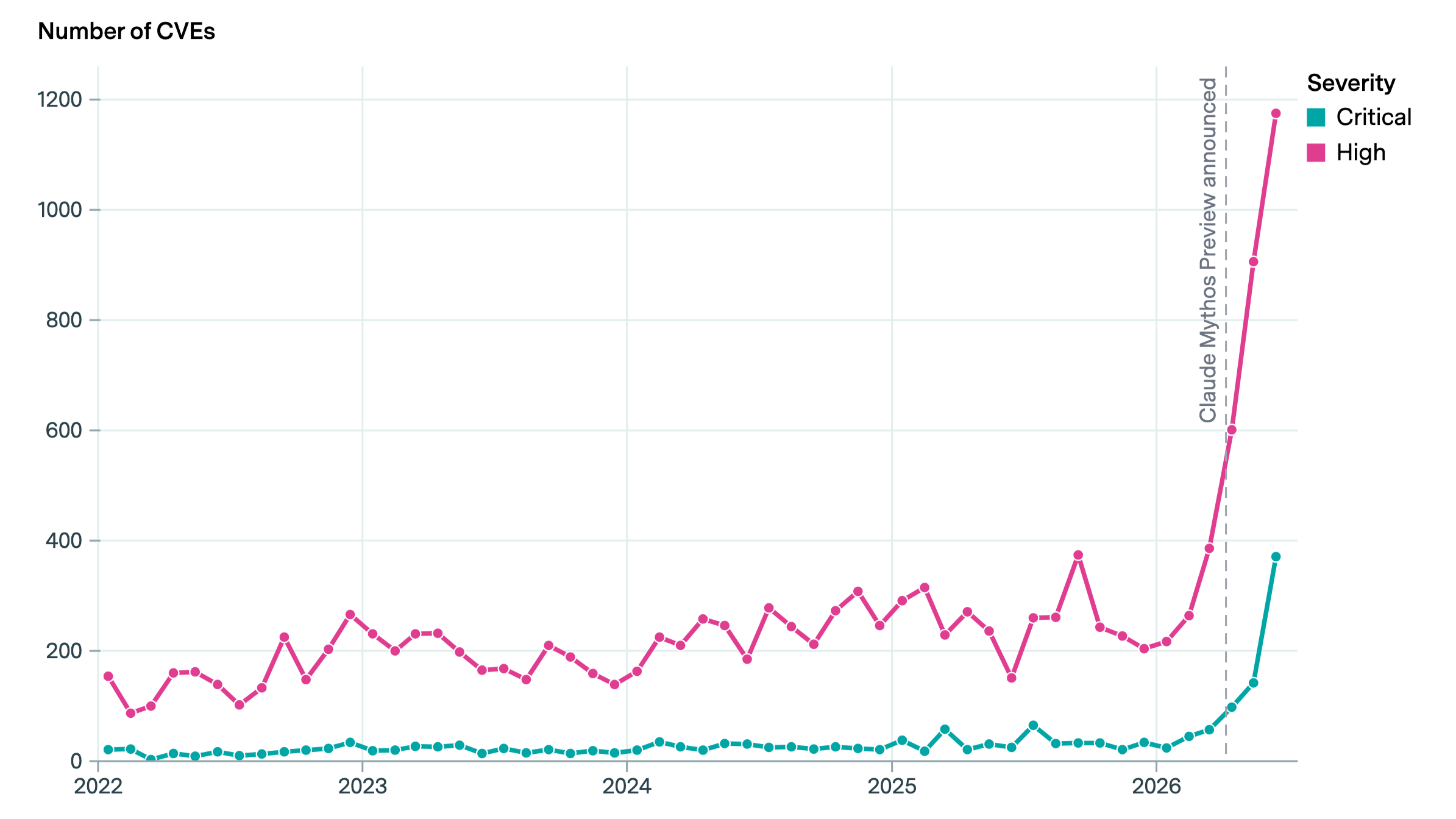
Notable organizations disclosed ~1,300 high- and critical-severity CVEs in June 2026, roughly 3.5× the pre-Mythos monthly record. Epoch AI's breakdown of vulnerability disclosures following Anthropic's Project Glasswing.
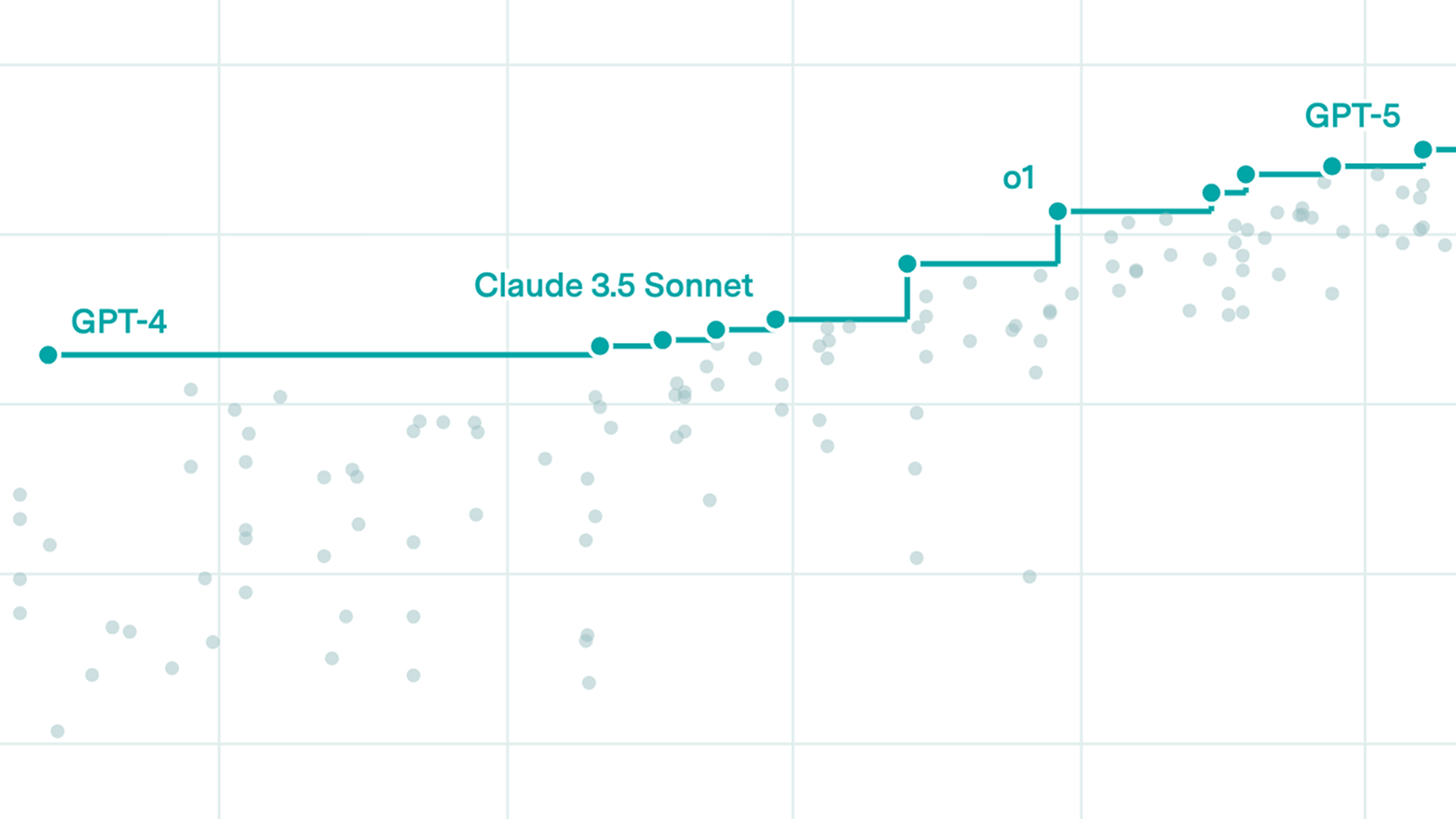
GPT-4 topped Epoch's Capabilities Index (ECI) for roughly a year after its March 2023 release — no model since has led for as long. The second-longest reign, by o1, lasted barely three months.
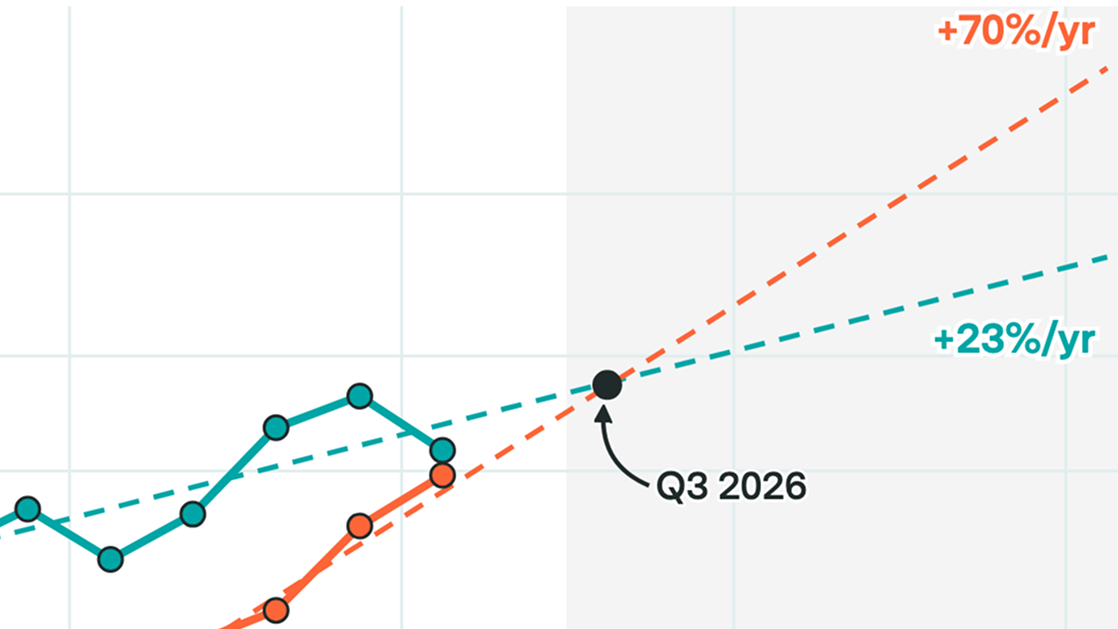
Aggregate cash capex across Microsoft, Amazon, Alphabet, Meta, and Oracle is on track to overtake operating cash flow in Q3 2026. Epoch AI's breakdown of how hyperscalers are financing the AI buildout.
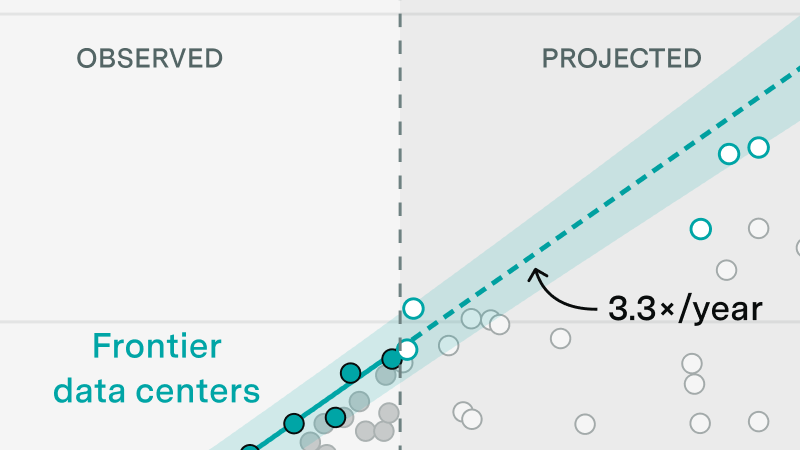
Since Colossus 1 launched in August 2024, the record for the largest AI data center has doubled every seven months. Epoch AI's breakdown of single-site compute capacity trends through 2028.
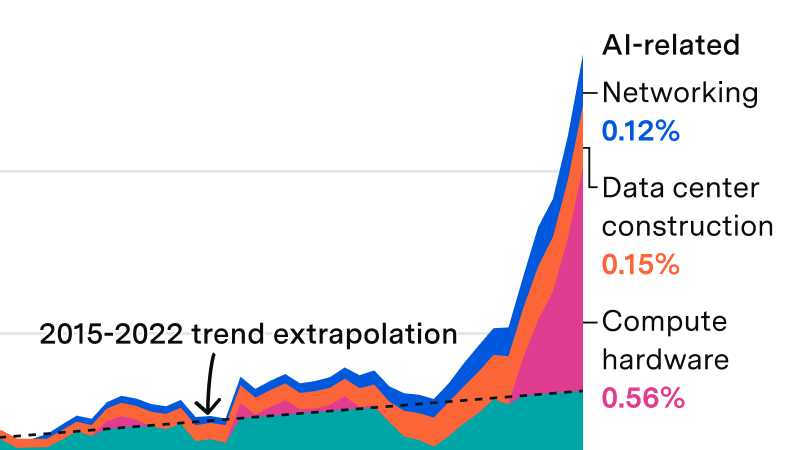
Investment spending on AI data centers, hardware, and networking together amounted to 1.4% of US GDP in Q1 2026, up from 0.7% — a rapid rise driven by AI infrastructure that has made the buildout a leading driver of growth in US private investment.
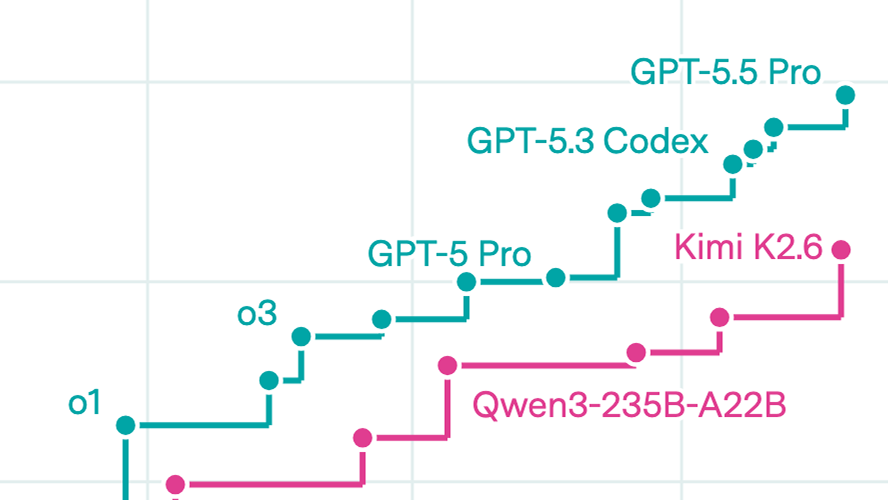
Since January 2026, the most capable open-weight models have lagged frontier closed models by an average of four months, or 8 ECI points.
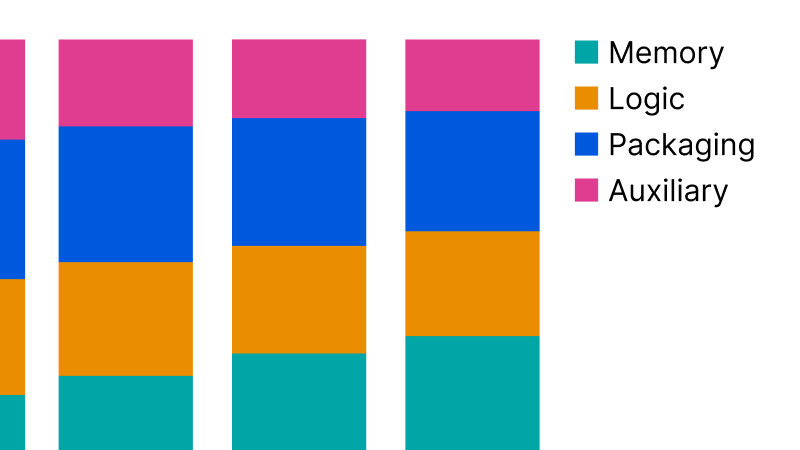
High-bandwidth memory (HBM) accounts for 63% of AI chip component costs, up from 52% in Q1 2024. Epoch AI's breakdown of component cost shifts across major chip designers.