Featured
Paper
Aug. 11, 2025
Data Insight
Jan. 16, 2026
Newsletter
Dec. 17, 2025
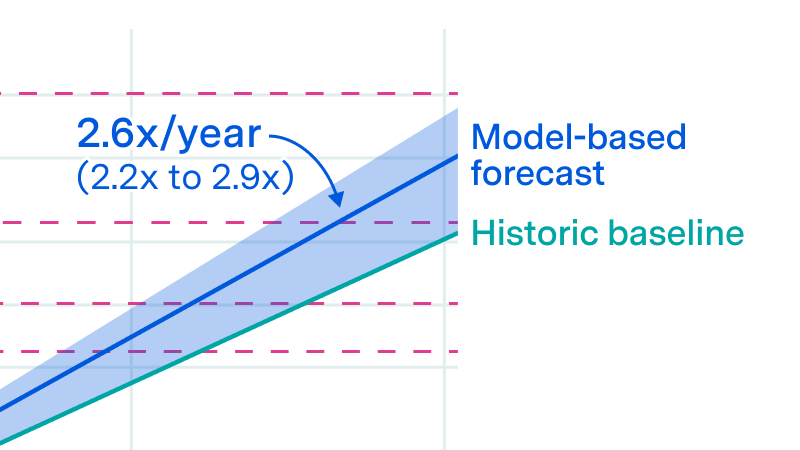
AI systems consume enormous and rapidly growing amounts of energy. As of 2025, the power required to train frontier models has been doubling annually, and new data centers are placing significant demands on power grids. The energy efficiency of AI hardware has been improving by roughly 40% each year, but the growth in compute demand has been outpacing it. Epoch tracks the power requirements of frontier AI, how efficiency gains compare to the growth in compute usage, and what the balance between energy demand and supply means for AI development.

AI compute draws tens of gigawatts globally—comparable to New York state—yet a single chatbot query uses less than a microwave in 10 seconds. Epoch AI's guide to AI energy use, from training to inference to local grid impacts.
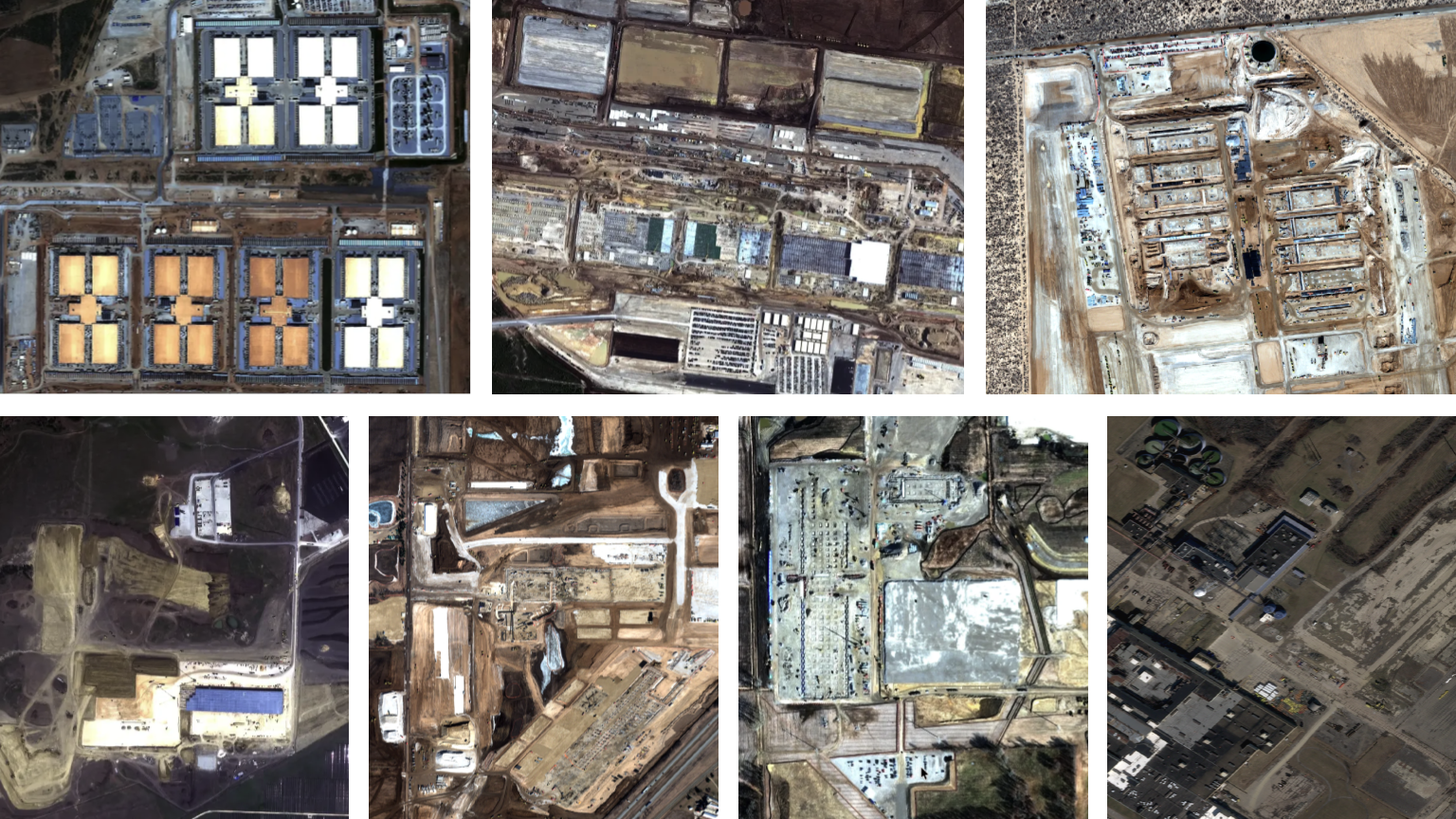
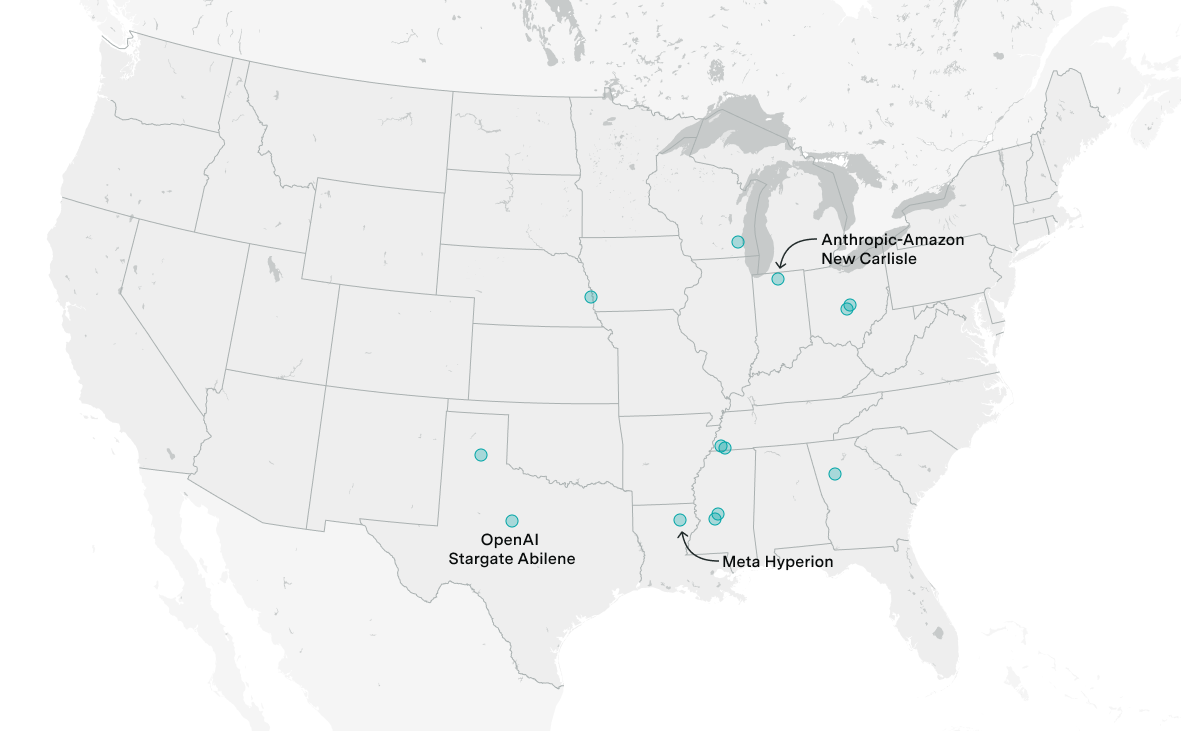
The $500 billion AI data center initiative is projected to exceed 9 gigawatts of capacity by 2029, with 0.3 gigawatts already operational in Abilene and six more US sites under active construction.
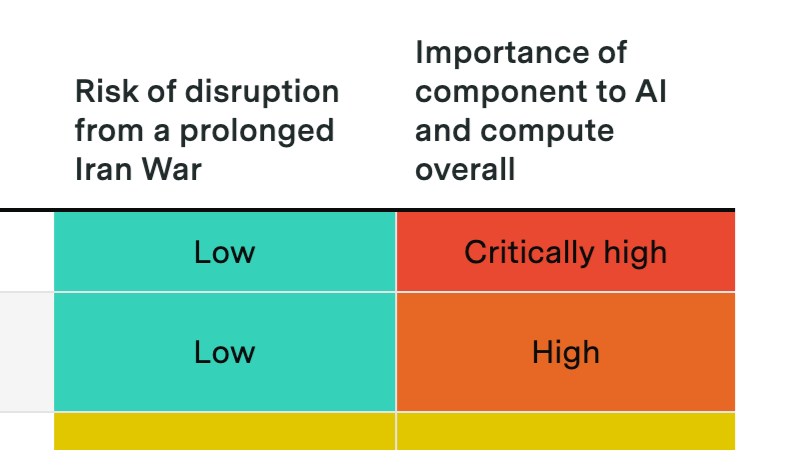
A prolonged Hormuz crisis probably won't derail the compute buildout, but it could slow data center expansion and disrupt Gulf investment flows into AI.
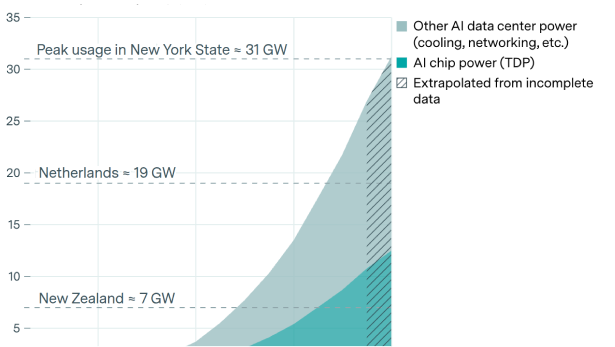
Total AI data center power capacity reached approximately 30 GW in the last quarter of 2025—comparable to peak power usage in New York State, and outstripping many developed countries.
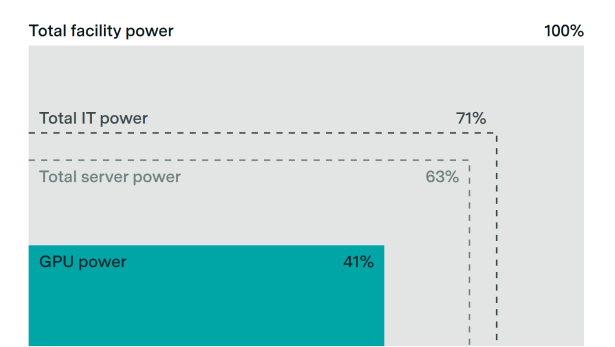
Breaking down the share of power going to different components in frontier AI data centers
Why power is less of a bottleneck than you think.
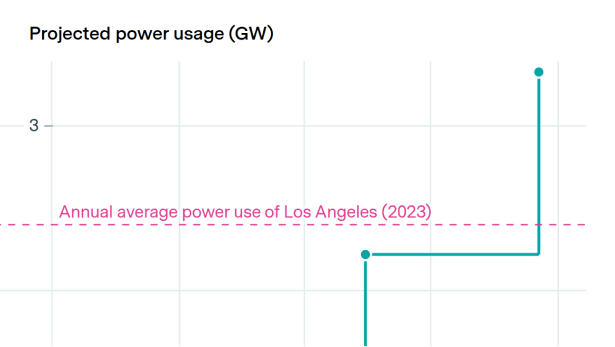
AI companies are planning a buildout of data centers that will rank among the largest infrastructure projects in history. We examine their power demands, what makes AI data centers special, and what all this means for AI policy and the future of AI.
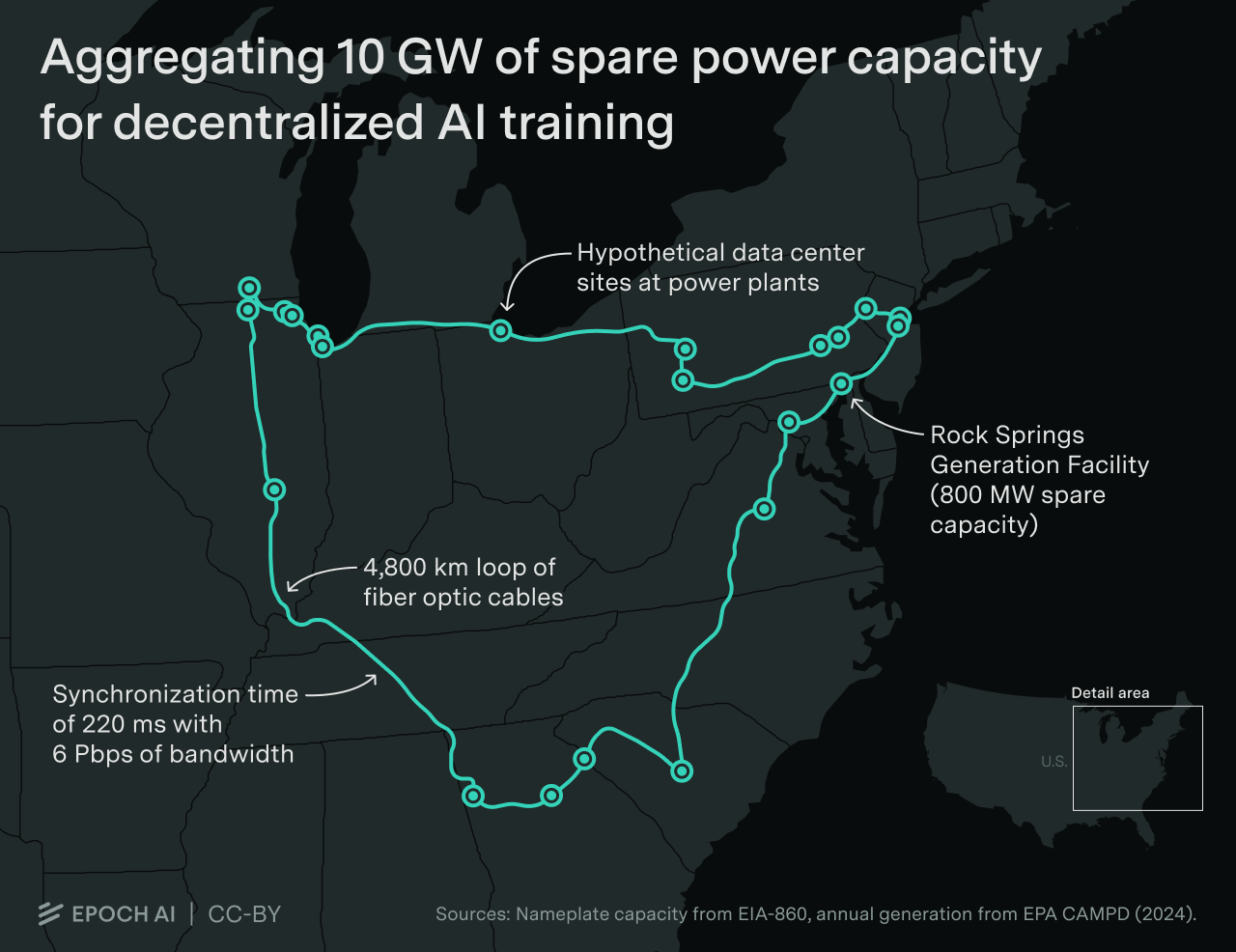
We illustrate a decentralized 10 GW training run across a dozen sites spanning thousands of kilometers. Developers are likely to scale data centers to multi-gigawatt levels before adopting decentralized training.
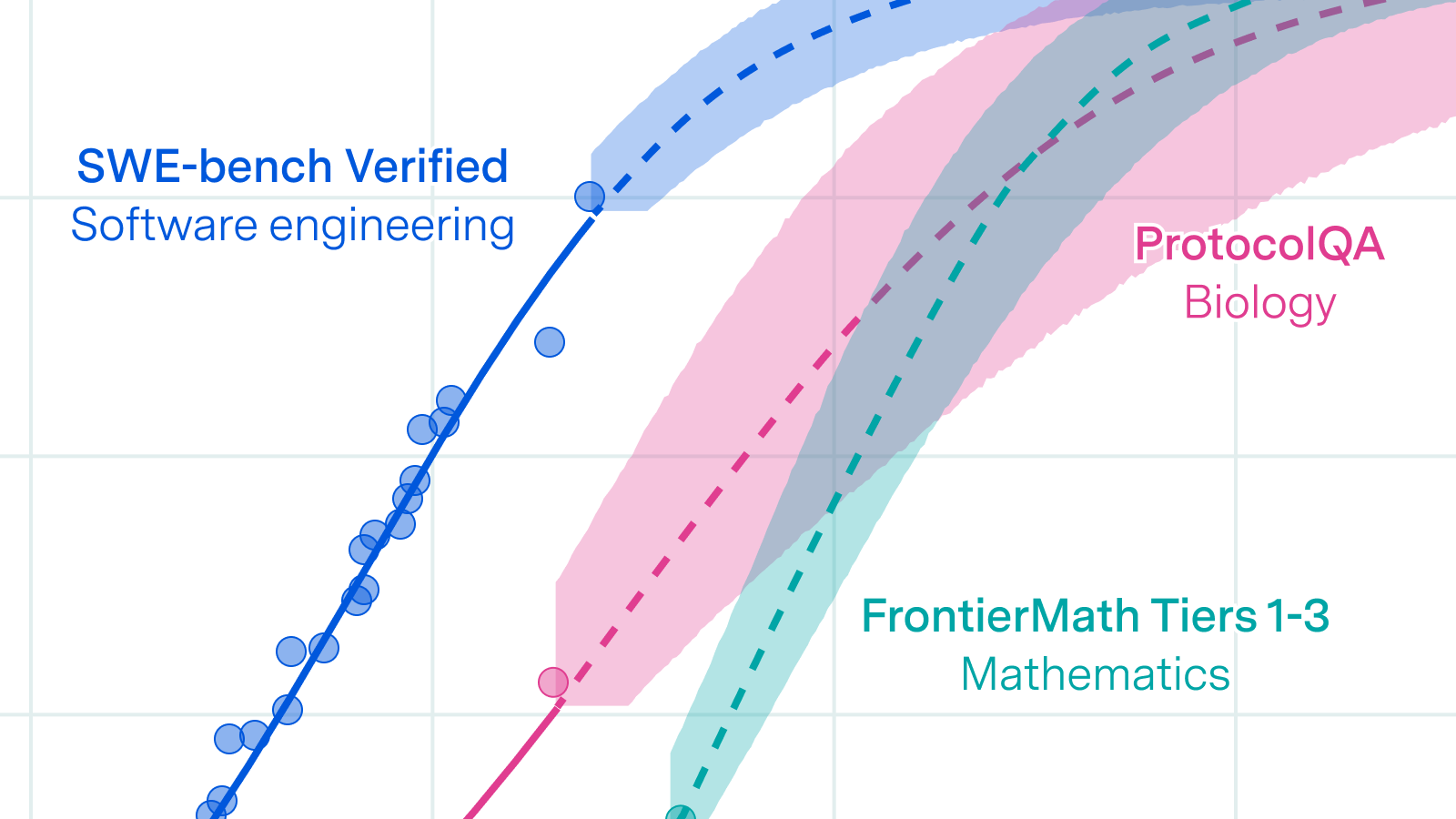
If scaling persists to 2030, AI investments will reach hundreds of billions of dollars and require gigawatts of power. Benchmarks suggest AI could improve productivity in valuable areas such as scientific R&D.